
Dark clouds gathering above the Mexico City Stadium and flashes of lightning across the sky created a dramatic setting before kick-off, matching the significance of the occasion. With Mexico chasing another landmark achievement at a home World Cup and Ecuador attempting to secure their first-ever victory in the knockout rounds, anticipation was high long before the opening whistle.
Playing in the Mexican capital added another layer to the occasion. Beyond tactics and individual quality, the atmosphere inside and outside the stadium carried a sense of expectation as supporters hoped their team could rise to the moment. That energy only intensified as Mexico produced a commanding display to claim a 2-0 victory and advance to the round of 16.
Before the match, Ecuador had described the connection between the two nations as a “brotherly” one. Once play began, however, there was little sign of friendship as Mexico imposed themselves from the opening minutes with relentless pressure.
Mexico seize control with relentless first-half display
The hosts wasted no time forcing Ecuador onto the back foot, entering the penalty area repeatedly during the opening exchanges. Teenage midfielder Gilberto Mora first fired over the crossbar before later sending an excellent effort narrowly wide after finding space inside the box. Raul Jimenez also came close, directing a header wide from an inviting Luis Romo delivery.
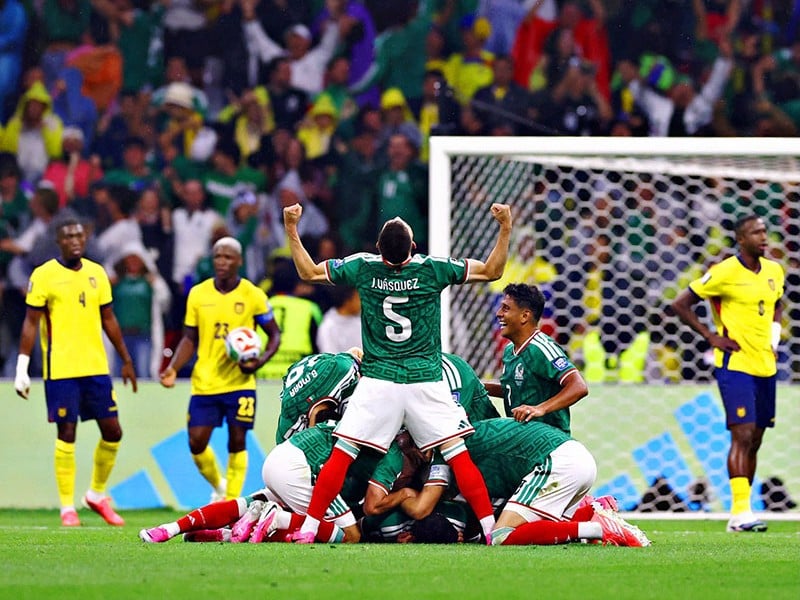
Mexico’s early dominance always suggested a breakthrough was approaching, and it arrived after 22 minutes. Julián Quinones collected the ball during a counter-attack, surged into the area, and struck an unstoppable finish beyond Hernán Galíndez to ignite celebrations throughout the stadium.
Confidence surged after the opener as Mexico continued to attack with pace, creativity, and conviction. Even the hydration break, which had interrupted the rhythm of several matches during the tournament, failed to halt their momentum. Jimenez then combined neatly with Quinones before unleashing a powerful strike from outside the penalty area that flew into the top corner, doubling the advantage.
The reaction inside the stadium was extraordinary. With around 80,000 supporters generating deafening noise, the celebrations became so animated that television cameras struggled to remain steady while following the players.
Hosts defend their advantage after the interval
The second half unfolded differently from the first as Mexico became more focused on protecting their lead than extending it. They defended with discipline, welcoming Ecuador onto the ball while every important tackle, save by Rangel, and dangerous counter-attack was greeted by huge encouragement from the home supporters.
Ecuador did create opportunities despite their difficult evening. Gonzalo Plata came closest when he brilliantly nutmegged an opponent before striking the woodwork, but clear chances remained limited. Mexico still threatened from set pieces, with Cesar Montes going close twice with headers in quick succession.
Although Ecuador enjoyed more possession after the interval, their attacking play rarely troubled the hosts consistently. Their approach became predictable, relying heavily on long passes, while Mexico comfortably managed the contest for long periods.
Mexico move another step toward history
Frustration eventually boiled over late in the match when Piero Hincapie received a red card after covering his mouth while speaking. The incident reflected the visitors’ growing sense of helplessness as the game slipped beyond their reach.
For Mexico, the victory represented another significant step in their World Cup journey. The nation has never progressed beyond the fifth match of the tournament, although it did reach the quarter-finals on both previous occasions it hosted the competition in 1970 and 1986.
Their next challenge will come on 5 July, when they face either England or DR Congo in the round of 16 at the Azteca. Having already witnessed countless famous moments over the years, the famous stadium has now added another unforgettable chapter as Mexico continues its pursuit of history.