
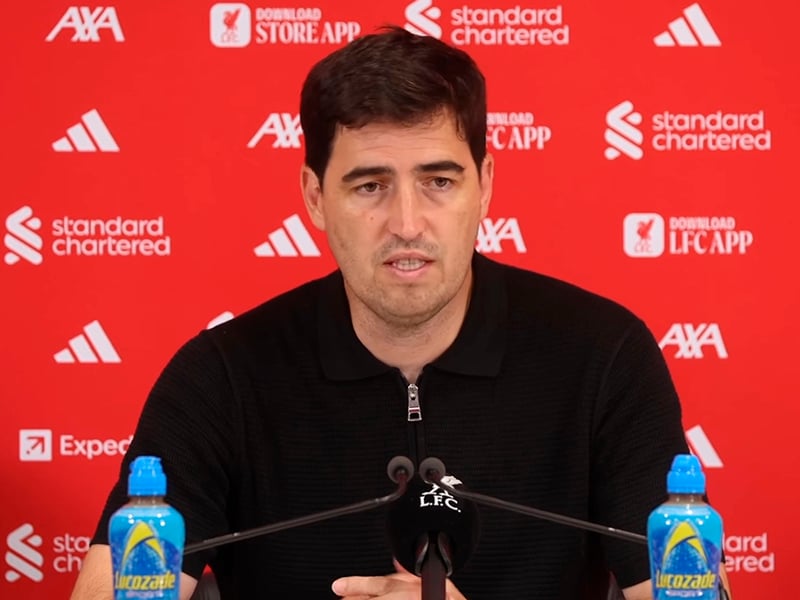
Liverpool have dropped points once again in the Premier League, raising questions about their choice to part ways with Arne Slot and bring in Andoni Iraola. The decision to appoint the former AFC Bournemouth boss rested on a straightforward vision: to hire a coach whose sides press with aggression, attack with verticality, and generate disorder through sheer intensity.
That approach flourished at Bournemouth, yet after four Premier League fixtures under Iraola at Liverpool, the anticipated overhaul has been gradual. Liverpool are still without a defeat, but three draws from four league outings and Saturday’s 0-0 stalemate at home to Fulham have sparked concern among supporters and pundits alike.
Is Iraola a manager built for “small-team football”?
It would be simplistic to label Iraola as a coach only capable of succeeding at smaller clubs.
His achievements at Rayo Vallecano and Bournemouth were never founded on sitting deep and waiting to counter, but on taking the initiative. His teams pressed high up the pitch, moved the ball forward rapidly, and looked to win possession near the opposition goal.
At Bournemouth, this proved especially effective because the players grasped their responsibilities. Iraola built an aggressive 4-2-3-1 shape in which midfielders and defenders could advance to force turnovers. At Liverpool, though, the weight of expectation appears to be restraining them.
Bournemouth troubled bigger sides under Iraola by making matches uncomfortable, but Liverpool are expected to dictate those same matches. At Bournemouth, that coordination was developed over time. Existing tactical analysis of Iraola’s tenure indicates that the Cherries required time to establish the pressing connections that ultimately became their biggest asset. Liverpool are still grasping those movements. Against Fulham, Liverpool lacked both the energy and attacking incision required to convert possession into clear opportunities.
Can Iraola control games?
This is where Iraola’s credentials as Liverpool manager will be put to the test. His football is intentionally high-risk. He favours quick recoveries over endless possession, which can be devastating when a team has space to exploit. But Liverpool often come up against opponents who sit deeper and eliminate that space.
Against Fulham, there was minimal room behind the defense for Liverpool to take advantage of. The match therefore demanded patience, positional play, and accurate final passes, which are areas where the team appeared less convincing. That does not mean Iraola is the wrong appointment, but it does mean Liverpool may need considerable patience to allow both Iraola and the squad to develop.
Why Liverpool still need to give Iraola time
The Bournemouth evidence indicates there is a very capable coach beneath this challenging start. Iraola turned Bournemouth into one of the Premier League’s most aggressive pressing sides and eventually led them to sixth place in 2025/26.
Liverpool’s challenge is different, in that Iraola must demonstrate that his principles can deliver not only entertaining football but also sustained control against teams determined to deny him space. The 2-1 Champions League victory over Atlético de Madrid showed that Liverpool can already produce the intensity and resilience Iraola demands. The Fulham draw revealed the opposite side of the experiment.