
The Los Angeles Clippers have agreed to the NBA’s penalties regarding alleged salary cap circumvention involving Kawhi Leonard, putting an end to their effort to fight the league’s discipline.
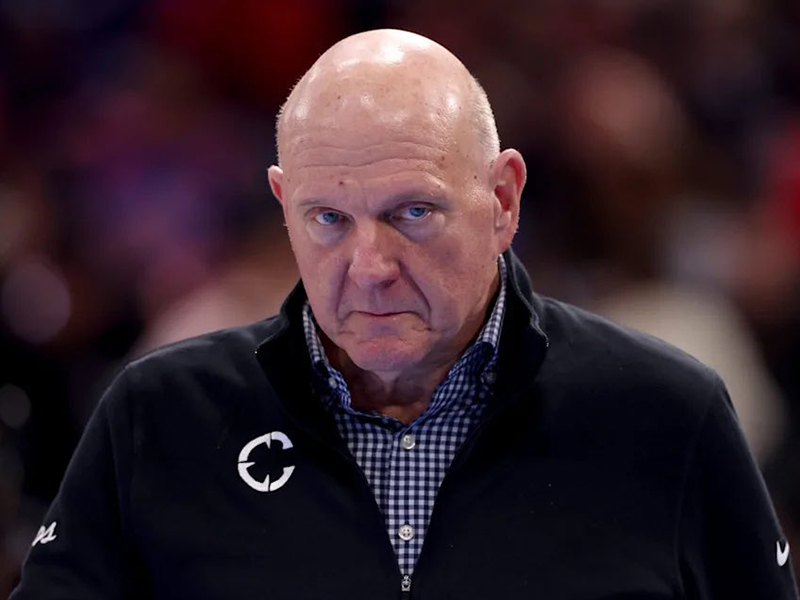
Steve Ballmer made the announcement on Sunday night, offering an apology to Clippers fans and the league while taking responsibility as the team’s principal owner. The Clippers have already paid the $30 million fine and will follow the remaining sanctions, even though they still disagree with some parts of the league’s conclusions.
The punishment consists of five stripped first-round picks, a one-year suspension for Ballmer and Gillian Zucker, and a six-month suspension for Lawrence Frank.
Clippers accept NBA penalties after cap investigation
At first, the Clippers were expected to contest any punishment through the arbitration process set out in the NBA’s collective bargaining agreement. But that process can only be started by the NBPA, and since the NBA and NBPA had agreed on the penalties, the Clippers did not have access to that league-approved route.
The other option was to take the dispute to court, but that seemed like a difficult path. Recent precedent involving the New York Knicks and Toronto Raptors showed that courts generally prefer sports disputes to be settled within the relevant league structure.
With those choices in front of them, the Clippers chose to accept the NBA penalties. Ballmer said the organization would move forward while complying with the sanctions, even though it still disputes parts of the investigation’s findings.
NBA penalties could let the Clippers regain picks
Accepting the punishment may eventually give the Clippers a chance to seek some relief from the loss of their draft capital. The clearest precedent comes from the Minnesota Timberwolves and their 2000 salary cap circumvention case involving Joe Smith.
Minnesota was initially stripped of five first-round picks after illegally agreeing to multiple contracts with Smith in advance. Yet the NBA later returned two of those selections. In December 2000, the league restored Minnesota’s 2003 first-round pick after owner Glen Taylor accepted a suspension and basketball executive Kevin McHale agreed to take a leave of absence.
One year later, the NBA also returned the Timberwolves’ 2005 first-round pick. Commissioner David Stern cited the other penalties imposed on Minnesota and the team’s conduct since the Smith case as reasons for the decision.
The precedent is limited to one case and is not specifically established by the CBA. Still, the Timberwolves’ experience suggests that accepting the NBA’s ruling and demonstrating good conduct could potentially create an opportunity for the Clippers to recover some of their lost picks.
Clippers face obstacles to following Wolves’ precedent
There is no guarantee that the NBA will treat the Clippers the same way. One major difference is that the Clippers are also being investigated by the Department of Justice, and any new findings could affect how the situation develops.
The team’s previous history with cap circumvention could also make it harder to receive leniency. The Clippers were already repeat offenders when the Leonard investigation began because of their 2015 violations involving DeAndre Jordan. There has also been speculation about other possible recent violations, although those have not resulted in an NBA investigation.
The Bradley Beal contract is another potentially relevant issue. The Clippers signed Beal last offseason to a two-year, $11 million deal using the taxpayer mid-level exception. After playing six games before suffering a season-ending hip fracture, Beal declined his player option this offseason and returned to the Clippers on a 20% raise, the largest increase permitted under his Non-Bird Rights.
The Clippers also chose to sign-and-trade Bennedict Mathurin to the New Orleans Pelicans, despite Mathurin being younger and healthier and earning only slightly more on his new contract. The NBA is not known to be investigating Beal’s deal, but the arrangement has been compared with the situation involving Gary Trent Jr. and the Milwaukee Bucks, which is under investigation.
Clippers hope NBA reduces five-pick punishment
The Clippers have previously signed established veterans to minimum contracts following buyouts and later retained some of them through Early Bird Rights after two years. Players such as Nicolas Batum and Reggie Jackson were paid in line with their perceived market value, making those arrangements less questionable from a basketball perspective.
The Beal deal stands out more because of its circumstances, particularly with the Clippers moving toward what is described as a rebuild. However, there is no known investigation into the contract, and any future allegations of wrongdoing could make it less likely that the Clippers receive relief.
Ultimately, there is no defined mechanism that guarantees the return of any draft picks. Any reduction in the punishment would be at the commissioner’s discretion, and NBA commissioner Adam Silver could decide that the circumstances surrounding the Clippers differ too significantly from Minnesota’s case.
Still, accepting the penalties gives the Clippers at least a potential route toward recovering some of their draft capital. Rather than pursuing what appeared to be a difficult legal fight, the organization has chosen to comply with the NBA’s ruling and leave open the possibility that the five-pick punishment could eventually be reduced.