
The New York Giants are dealing with a significant quarterback dilemma following Jaxson Dart’s season-ending knee injury in Monday night’s defeat to the Los Angeles Rams.
According to ESPN, Dart’s ACL was not torn, but he suffered damage to his MCL, PCL, and meniscus, with the meniscus being the primary worry. The Giants will now rely on Jameis Winston, though his unpredictable playing style might push the team to explore alternatives if he falters.
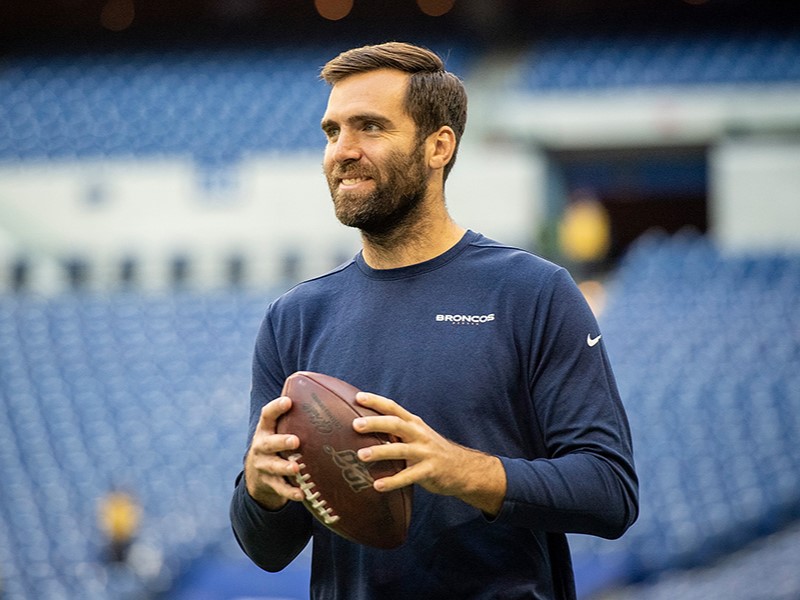
A notable candidate is Cincinnati Bengals backup Joe Flacco. The 41-year-old has an extensive history with Giants head coach John Harbaugh, including a Super Bowl-winning collaboration with the Baltimore Ravens, and his outings for Cincinnati last season proved he can still deliver when given the opportunity.
Giants quarterback situation after Jaxson Dart injury
Winston is already familiar with the Giants’ system after spending last season with the franchise. He also inked a two-year, $13 million extension to stay in New York as Dart’s backup, giving Harbaugh and Matt Nagy a veteran quarterback they have confidence in.
The former No. 1 overall selection has ample NFL experience, but his tendency to take shots downfield can also result in turnovers. That problem was clear when he relieved Dart on Monday, as Winston completed 11 of 27 passes for 111 yards and an interception during the 28-6 loss.
Winston earned Pro Bowl honors as a rookie with the Tampa Bay Buccaneers after passing for 4,042 yards, 22 touchdowns, and 15 interceptions. In 2019, he became the first quarterback to post a 30-touchdown, 30-interception season, finishing with 5,109 passing yards, 33 touchdowns, and 30 interceptions.
Other options exist if Winston cannot produce, such as Tyler Huntley, Mac Jones, and Anthony Richardson. However, Flacco might be the most fascinating alternative if the Giants determine they need to search outside the organization.
Joe Flacco’s trade could give the Giants a proven option
Flacco is still part of a solid quarterback arrangement in Cincinnati, where he serves as Joe Burrow’s backup. The Bengals initially obtained him from the Cleveland Browns last season after Burrow was sidelined for nine games due to a toe injury and Jake Browning was not delivering enough.
Flacco promptly showed what he could bring. In his second start for Cincinnati, he passed for 342 yards, three touchdowns, and no interceptions while generating the 30th game-winning drive of his career in a win over the Pittsburgh Steelers.
Two weeks afterward, Flacco threw for 470 yards and four touchdowns while helping Cincinnati put up 40 points, even though the Bengals eventually lost the game. Over six starts in 2025, he averaged 272.7 passing yards per game while tossing 13 touchdowns and four interceptions.
Despite winning only one of those six starts, mostly because of Cincinnati’s historically weak defense, Flacco gave a substantial lift to the Bengals’ offense.
Flacco and Harbaugh have Super Bowl history
A reunion between Flacco and Harbaugh would carry an evident connection. The two landed in Baltimore together in 2008, with Flacco, chosen No. 18 overall out of Delaware, starting the season opener after Kyle Boller sustained a preseason injury and Troy Smith contracted Lemierre’s syndrome.
Flacco won his first NFL start against the Bengals and went on to cement himself as Baltimore’s starter. He concluded his Ravens career with a 96-67 record as a starter and went 10-6 in the playoffs.
That postseason record featured Baltimore’s Super Bowl XLVII triumph, when Flacco was named Super Bowl MVP. Bringing him to New York during Harbaugh’s first season with the Giants would therefore reunite a coach and quarterback who already share a lengthy history of success.
Why a Joe Flacco trade could be risky
The biggest hurdle is the cost. Cincinnati does not seem willing to let Flacco go after re-signing him, especially with Super Bowl aspirations for 2026 and a backup quarterback plan in place should Burrow miss time again.
For the Giants, landing Flacco would probably require more than a late-round pick swap. That raises the question of whether New York should invest significant draft capital in a 41-year-old quarterback when it remains unclear whether the team has the ceiling of a playoff contender.
Age is another evident concern. Flacco is now 41, and there is no certainty that his productive stretch with Cincinnati last season can be duplicated. His six-start run could turn out to have been the final major chapter of his career.
For now, the Giants can retain their draft capital and proceed with Winston, who already knows the system. But if that plan fails, Flacco’s experience, production, and history with Harbaugh could make him one of the most logical external options available.