
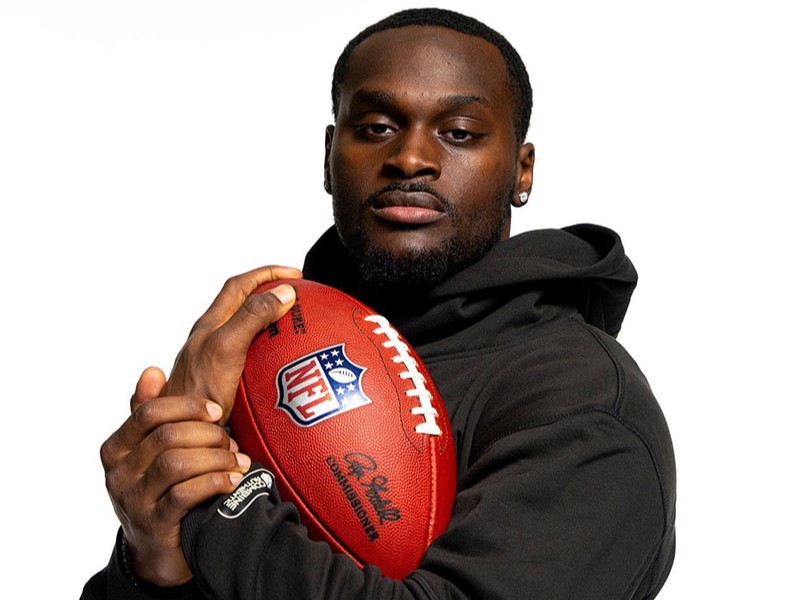
The 2026 NFL Draft is approaching with considerable uncertainty, and while Indiana quarterback Fernando Mendoza is widely projected to go No. 1 overall to the Las Vegas Raiders, attention quickly shifts to who will follow him. Alabama quarterback Ty Simpson has emerged as one of the most discussed prospects in the class, with opinions varying widely on his draft stock.
Some evaluators believe Simpson could be a better overall NFL prospect than Mendoza, while others struggle to place him within the first round. Certain analysts reported that multiple teams prefer Simpson, but others noted the absence of clear first-round grades for him after evaluations at events like the Senior Bowl. As a result, projections for Simpson’s draft position remain inconsistent.
Several teams could be potential landing spots depending on how the board unfolds. Clubs such as the Arizona Cardinals, Pittsburgh Steelers, and Cleveland Browns are among those mentioned in connection with quarterback needs or flexibility. With multiple franchises holding first-round selections, there is also speculation that a team could trade back into the opening round specifically to secure Simpson.
Statistically, Simpson produced a strong season in 2025, earning Second Team All-SEC honors while throwing for 3,567 yards, 28 touchdowns, and five interceptions. His performance featured a strong start, averaging over 270 passing yards per game with minimal turnovers through the first portion of the season, before experiencing a dip in production and efficiency in the later stretch.
Where Jeremiyah Love will be selected
Notre Dame running back Jeremiyah Love is widely regarded as one of the top overall talents in the draft, raising questions about how high he could be selected. Running backs have recently been taken early in the first round, and Love is viewed as a candidate to go even earlier than some of the recent top selections at the position.
The Tennessee Titans at No. 4 overall are frequently mentioned as a potential destination, despite already having depth at running back. Other teams such as the New York Giants at No. 5 and the Washington Commanders at No. 7 are also considered strong possibilities. Washington, in particular, is often viewed as a likely landing spot if Love is still available.
Love’s production supports his high projection. Over the past two seasons, he led the FBS in rushing touchdowns and total touchdowns from scrimmage, while consistently surpassing 1,100 rushing yards and double-digit touchdowns each year. His combination of scoring ability and explosiveness makes him one of the most impactful offensive players in the class.
Veteran players who could be moved
Trades remain a major talking point heading into the draft, with recent years showing that established players can be dealt for significant returns. Multiple high-profile moves have already taken place in previous cycles, and more activity is expected during draft weekend.
Philadelphia Eagles wide receiver A.J. Brown is one player generating speculation. Although he has been productive, including multiple consecutive 1,000-yard seasons, his role in the offense and past comments have fueled discussion about a possible trade. However, financial considerations play a significant role, as an immediate trade would result in a substantial dead cap hit for the Eagles, while a post–June 1 move would offer more flexibility.
San Francisco 49ers wide receiver Brandon Aiyuk is another name to monitor. Reports suggest he may have played his final snaps with the team, and San Francisco is open to moving him for compensation. His contract situation and previous extension add complexity, but there is interest from teams that could pursue him either via trade or other arrangements.
Potential surprise first-round selections
Every draft typically features unexpected first-round selections, and 2026 is expected to be no different. Several prospects outside the mainstream projections could hear their names called on opening night.
Linebacker Anthony Hill Jr. of Texas is one candidate, known for his athleticism and production in both pass-rushing and coverage situations. Linebacker Jake Golday from Cincinnati is another possibility, bringing high tackle production and a background as a converted defensive end. His profile has drawn comparisons to players who have recently exceeded expectations at the position.
Edge rushers also feature prominently among potential surprises. Malachi Lawrence of UCF showcased strong athletic testing numbers at the combine, while R. Mason Thomas of Oklahoma brings consistent production and effort despite size concerns. Akheem Mesidor of Miami led the ACC in sacks and pressures, adding to his appeal despite being one of the older prospects in the class.
At cornerback, Keith Abney II of Arizona State stands out after a strong season that included limiting opposing quarterbacks to a low passer rating and earning All-Big 12 honors. His competitive playing style is seen as both an asset and a factor that could lead to penalties.
How many wide receivers could go in round one
Wide receiver is another position generating significant attention, with projections suggesting multiple players at the position could be selected in the first round. The total number remains uncertain, but the possibility of six receivers being taken on opening night is being discussed.
Carnell Tate of Ohio State is considered a leading candidate among the wideouts, following a productive season that included multiple deep touchdown receptions. Jordyn Tyson of Arizona State is also highly regarded, though injury concerns may affect his draft placement despite strong statistical output.
Other wide receivers such as Makai Lemon of USC, Omar Cooper Jr. of Indiana, KC Concepcion of Texas A&M, and Denzel Boston of Washington bring varied skill sets ranging from slot production to red-zone dominance and versatility in multiple roles. Each offers traits that could appeal to teams selecting late in the first round.
In addition, there are additional receivers outside this group who could move into first-round consideration depending on how the draft board develops. This depth at the position adds further unpredictability to how the opening night selections may unfold.