
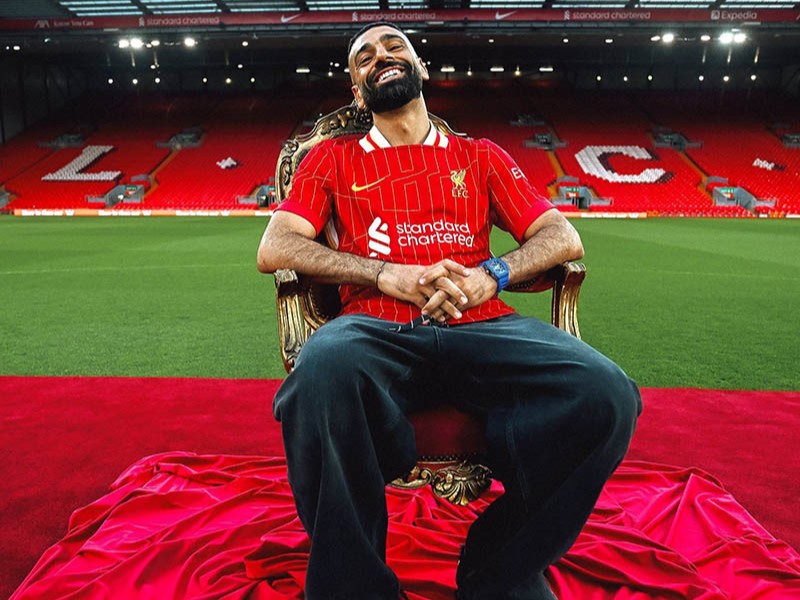
The farewell to Mohamed Salah is underway, marking the end of a remarkable chapter for both player and club. Widely regarded as one of the Premier League’s greatest figures, the Egyptian forward has made 435 appearances for Liverpool and could feature up to 15 more times before the season concludes.
Since arriving from AS Roma in 2017, Salah has collected six major trophies with the club. His individual record is equally striking, including four Premier League Golden Boots and three PFA Players’ Player of the Year awards. Across his time in England, no player has matched his combined output of 189 goals and 92 assists in the league.
His impact goes beyond numbers. From his trademark celebrations to his consistent match-winning contributions, Salah became a defining presence at Anfield. With 255 goals for Liverpool, only Ian Rush and Roger Hunt have scored more in the club’s history, underlining his place among its all-time greats.
Moments shared by teammates, such as glimpses of his extensive trophy collection, only reinforced his reputation. For many supporters, his excellence became routine — a player of the match awards tally that seemed almost effortless.
Tensions, turning points and a changing role
Less than a year ago, Salah’s future appeared firmly tied to Liverpool after signing a contract extension running until 2027. At that time, his performances left the club with little choice but to secure his services following a season where he led both the goals and assists charts in the league.
However, the situation shifted dramatically within months. By December, Salah had been dropped to the bench and eventually excluded from the squad after publicly addressing a breakdown in his relationship with manager Arne Slot. His frustrations had reportedly begun earlier, when he was left out of the starting lineup for a Champions League match against Eintracht Frankfurt in October.
While Liverpool won that game convincingly, the decision unsettled Salah, who believed his contributions justified a guaranteed starting role. That moment signaled a broader change — he was no longer considered untouchable within the team.
The club’s heavy summer spending, including the arrivals of Alexander Isak, Florian Wirtz, and Hugo Ekitike, further highlighted a shift in attacking priorities. Discussions with club officials made it clear that rotation, including the possibility of Salah being benched, was part of the plan — a reality he struggled to accept.
The road to departure and a farewell on his own terms
In the weeks before his public comments, Salah had already expressed concerns during meetings with Liverpool’s hierarchy. After his interview, he was left out of a trip to Inter Milan, though he later returned to action and contributed with an assist against Brighton, with the manager downplaying any ongoing issues.
While Salah was away at the Africa Cup of Nations, negotiations continued between the club and his representatives. By the time he returned in January, those close to the situation believed an understanding had been reached for him to leave at the end of the season.
The announcement of his departure did not come as a shock given the preceding events, though its timing carried significance. Salah requested that the news be shared early, allowing him to say goodbye properly and on his own terms — a gesture reflecting his connection with the supporters.
Despite the circumstances, his exit is expected to be marked with warmth and appreciation. Having built a life in the northwest with his family, the decision was not taken lightly. As he expressed himself, the bond with the club, city, and fans became far deeper than he had ever imagined.
Between now and his final appearance, tributes are certain to grow. Salah’s journey at Liverpool will be remembered not just for trophies and records but for the lasting impression he leaves behind as one of the club’s finest ever players.