
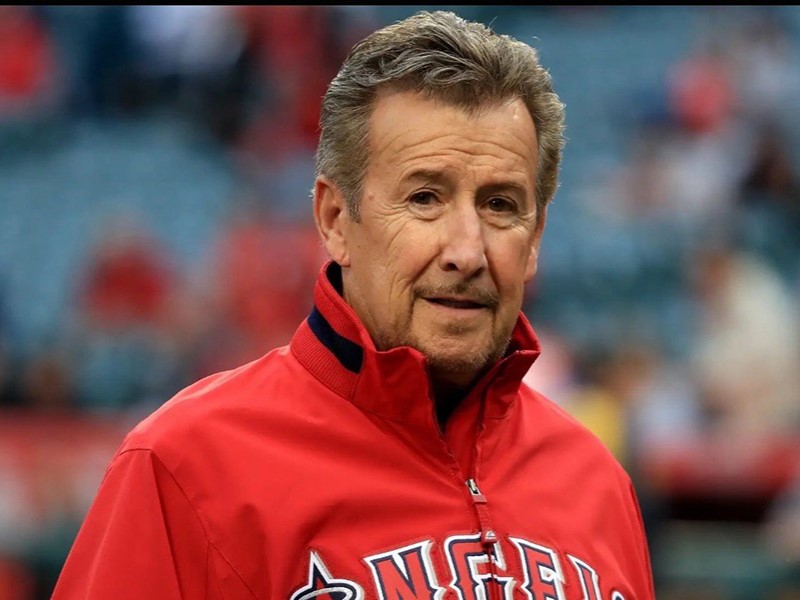
The Los Angeles Angels are set to undergo a change in ownership, and the reported $4 billion valuation has achieved more than just establishing a new MLB benchmark. It has also sparked discussions regarding the economic stability of Major League Baseball’s teams during a period when proprietors are advocating for a spending limit in the ongoing collective bargaining agreement discussions.
Arte Moreno’s arrangement to transfer the Angels to Stan Kroenke reportedly places the franchise’s worth at $4 billion, slightly surpassing the recent $3.9 billion acquisition of the San Diego Padres. Given the uncertainty surrounding the next CBA and the potential for a work stoppage impacting the 2027 season, the magnitude of this deal is hard to ignore.
Angels transaction underscores the worth of MLB teams
The Angels are not an obvious example of a team succeeding on the diamond. The organization recently endured its 11th consecutive losing campaign and has missed the playoffs since 2014. Their last postseason series triumph, and even their most recent playoff game victory, occurred back in 2005.
There has also been notable turbulence away from the field. The Angels have employed seven different managers since 2018, while their paid attendance has dropped by approximately 500,000 annually since 2019. The franchise also failed to maximize the remarkable tenures of Mike Trout and Shohei Ohtani during their prime years with the club.
All of this is before considering the Angels’ broader market circumstances. They compete with the Dodgers for attention in the Los Angeles area and play in a stadium that is nearly 60 years old. Yet despite these hurdles, Kroenke’s reported purchase price would make this the most costly sale in MLB history.
That is especially notable given the current climate. MLB owners and the league are pushing for a payroll cap, claiming publicly that such a mechanism could enhance competitive fairness and parity. However, the Angels’ valuation suggests that owning a franchise remains an extremely appealing investment even without those adjustments.
MLB owners have already enjoyed substantial gains
Moreno’s personal journey with the Angels provides another telling statistic. He acquired the team from the Walt Disney Company for only $180 million in 2003. Over two decades later, a reported $4 billion sale would translate to an annualized return of roughly 14.4%.
That performance stacks up well against typical long-term stock market returns and exceeds the estimated annualized gains from several recent high-profile sports franchise sales. These include the Denver Broncos and Washington Commanders in the NFL, as well as the Boston Celtics and Phoenix Suns in the NBA.
The figures challenge the notion that MLB teams are poor investments simply because they do not generate the same revenue multiples as franchises in other major American sports leagues. The evidence from real transactions leads to a very different conclusion.
MLB teams are not straightforward cash-generating enterprises. They operate as investment assets, which helps clarify the appeal to hedge-fund investors. For owners, the ultimate worth of a franchise can be shown not just through yearly revenues but also through what a future buyer is prepared to pay when the team is sold.
MLB franchise valuations reveal a different narrative
There is also a significant drawback when comparing MLB’s financial performance with other leagues: most team financials are not publicly disclosed. Apart from the publicly traded Braves and Blue Jays, the actual revenues earned by individual MLB teams are largely unknown.
This absence of transparency becomes even more relevant with team-controlled real estate projects near ballparks and team-owned or granted regional sports networks. Even before these elements became so prominent, franchise finances could be presented in ways that influenced public views of a team’s business operations.
MLB does possess a form of payroll control through the Competitive Balance Tax, often called the luxury tax. However, the system lacks a payroll floor, meaning there is no required minimum spending level imposed on clubs.
The Dodgers are a prime example of a team willing to exceed the highest CBT threshold. Their current revenue situation, though, is heavily shaped by a unique legal bankruptcy-related factor that is widely seen as unlikely to be replicated.
Salary cap debate encounters financial reality
If there is genuine fragility in MLB’s franchise economics, the league’s fragmented media-rights arrangement may be a more plausible explanation than the lack of a salary cap. Commissioner Rob Manfred has made tackling that issue a primary focus.
The recent franchise sales provide another reason to doubt the claim that MLB teams are struggling to draw investment. Forbes’ 2026 projections valued the Padres at $3.1 billion and the Angels at $2.8 billion, yet the eventual reported sale prices were $3.9 billion and $4 billion, respectively.
In both instances, the final deals exceeded Forbes’ estimates by more than one-third within less than six months. Whatever conclusions one draws from these discrepancies, the market’s readiness to pay considerably more than the projected values is hard to dismiss.
MLB and its owners may continue to characterize the league as an industry requiring a salary cap and potentially a difficult labor fight to achieve it. But the money exchanging hands tells a different tale. Moreno’s reported $4 billion departure, following a $180 million purchase in 2003, serves as powerful proof that MLB franchises remain robust, profitable, and highly desired investments.