
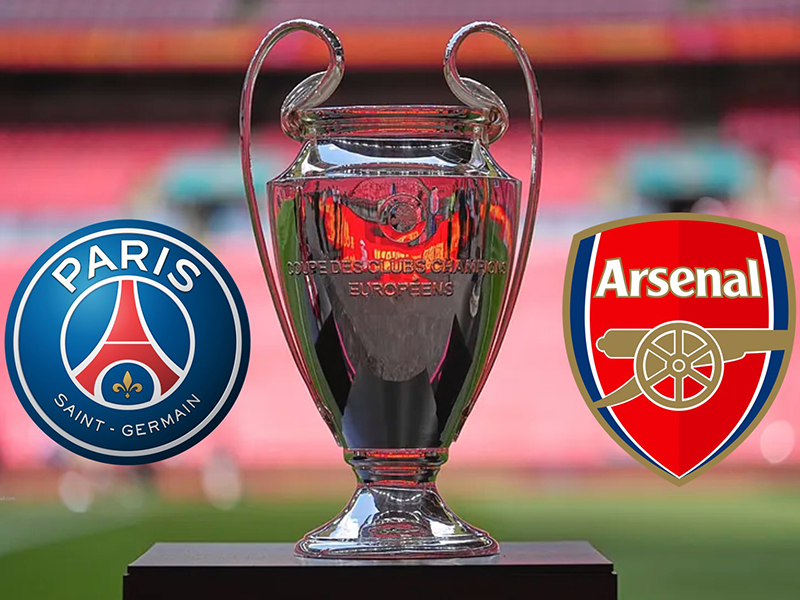
The 2025/26 campaign is approaching its conclusion, but one major contest remains as Paris Saint-Germain and Arsenal meet in the Champions League final. The match will be played at the Puskás Aréna in Budapest, where the French side will attempt to retain the trophy while the Premier League champions pursue the first European crown in the club’s history.
The encounter brings together two teams with contrasting approaches. Luis Enrique’s side is known for their attacking freedom, while Mikel Arteta’s team has built their success on balance, discipline, and efficiency. Alongside the tactical battle, several individual matchups could have a significant influence on the destination of the trophy.
Battle on the flanks could prove decisive
One of the most intriguing contests features Nuno Mendes and Bukayo Saka. The Arsenal winger remains one of his team’s primary attacking weapons, with many of their most dangerous moves flowing through him. Mendes will be tasked with limiting that threat while also contributing offensively through his own forward runs from the left side.
The duel becomes even more complex because Saka must decide how much defensive work to undertake. If he drops deeper to contain Mendes, Arsenal could lose some attacking presence. The involvement of Khvicha Kvaratskhelia on the same flank adds another layer to a battle that could heavily influence the flow of the game.
Kvaratskhelia himself is expected to provide another major challenge. The Georgian winger has earned widespread attention for his performances in European competition and has maintained that level during PSG’s latest title defense. His direct style, strength, and determination have made him a difficult opponent throughout the season.
Arsenal hope Jurriën Timber can help neutralize that danger. The defender has returned to training after spending nearly three months out and has expressed optimism about featuring in the final. If selected, he would immediately face one of the toughest assignments available on the pitch.
Midfield control remains a crucial factor
Much of PSG’s success begins in midfield, where Vitinha dictates the rhythm of play. While Fabián Ruiz and João Neves provide support with a mixture of energy and technical quality, Vitinha is often responsible for controlling possession and determining the pace of attacks. His passing range and composure allow PSG to switch between patience and acceleration when required.
Standing opposite him will be Declan Rice, whose game is built on intensity and relentless movement. The Arsenal midfielder covers large areas of the field and combines his work rate with technical ability. His tackling and forward surges are expected to be important if Arsenal are to prevent PSG from dominating central areas.
With neither side likely to allow many opportunities, success in midfield could become one of the defining elements of the final. Both Vitinha and Rice perform very different roles, yet each could be decisive in helping his team establish control.
Saliba faces stern examination against Dembélé
Arsenal’s progress this season has been founded on defensive solidity, with William Saliba playing a central role alongside Gabriel. Although the French defender has occasionally made mistakes, he remains one of the key figures in Arteta’s back line thanks to his pace, positioning, and physical presence.
His opponent will be Ousmane Dembélé, whose recent Champions League form has been particularly impressive. After experiencing fluctuations in performance during the campaign, the forward has rediscovered his scoring touch at an important moment, registering five goals across his last three appearances in the competition.
Operating as a false nine, Dembélé frequently moves into different areas of the field, forcing defenders to make difficult decisions. Those movements can create openings for teammates such as Kvaratskhelia and Désiré Doué. If chances arise in front of goal, PSG will look to Dembélé’s finishing ability to make the difference on the biggest stage.