
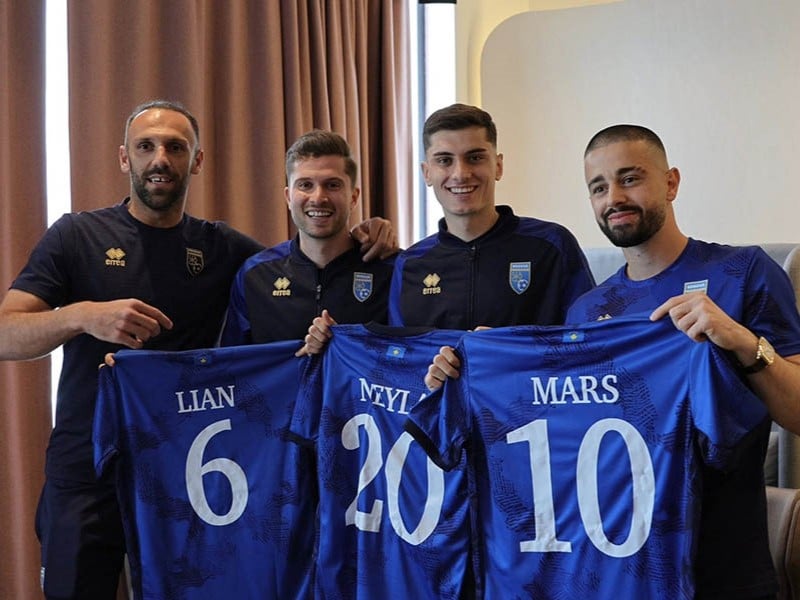
A decade ago, Kosovo had never taken part in a World Cup qualifying campaign, yet now they stand just one match away from reaching this summer’s finals. The team will host Turkey in a decisive playoff clash, knowing that victory would secure their place at the expanded 48-team tournament in the United States, Canada, and Mexico.
The encounter will be staged at the Fadil Vokrri Stadium in Pristina, where demand for tickets has far exceeded capacity. Head coach Franco Foda highlighted the overwhelming enthusiasm, noting that far more supporters would attend if space allowed, while also urging composure despite the emotional atmosphere.
Kosovo earned their place in this final after a dramatic 4-3 victory away to Slovakia in the semi-finals. Although excitement is widespread, the squad is focused on maintaining discipline to avoid costly errors in what is being described as a defining moment for the country.
Defying expectations on the road to the play-off
Ranked significantly lower than their opponents, Kosovo have consistently exceeded predictions throughout the campaign. After opening with a heavy defeat against Switzerland, they responded impressively by remaining unbeaten in their next five matches, including victories both home and away against Sweden and strong results against Slovenia.
According to local commentator Arben Berisha, early expectations were modest, especially following the initial setback. However, a turnaround in performances led to what many now describe as an extraordinary and unexpected journey, with the win over Slovenia regarded as one of the most significant achievements in the nation’s football history.
Turkey, who finished third at the 2002 World Cup but have not returned since, arrive as favorites based on ranking and experience. Still, Kosovo’s home advantage and recent form have fueled belief that another surprise result is possible in front of their passionate supporters.
More than football: a symbol of identity
Reaching the World Cup would carry meaning far beyond sport for Kosovo, a country that declared independence from Serbia in 2008 and gained recognition from FIFA and UEFA in 2016. With only partial international recognition globally, qualification would represent a major moment of visibility on the world stage.
Berisha emphasized that such an achievement could rank alongside the most important dates in the nation’s modern history, including the end of the Kosovo War and the declaration of independence. He noted that success would resonate internationally given the ongoing political context.
If they advance, Kosovo would enter a group featuring Australia, Paraguay, and the United States, with matches scheduled across Vancouver, San Francisco, and Los Angeles in June.
Rapid rise from humble beginnings
Kosovo’s football journey at the international level began only in 2014 with a goalless draw against Haiti, followed by a heavy loss to Turkey. Their first World Cup qualifier came in 2016 with a draw against Finland, but the campaign proved difficult as they suffered nine consecutive defeats and finished bottom of their group.
Progress came quickly thereafter, aided by players eligible through diaspora links in countries such as Germany, Switzerland, and Sweden. In Euro 2020 qualifying, they even led away against England before eventually losing, while finishing third in their group and reaching the play-off stage.
Key figures include record scorer Vedat Muriqi, alongside players like Fisnik Asllani, Arijanet Muric, and Edon Zhegrova. Experienced names such as Amir Rrahmani, Florent Hadergjonaj, and Milot Rashica have also contributed to the team’s development.
Pride and unity through football
Former captain Anel Rashkaj reflected on the early struggles of representing Kosovo, recalling difficulties with organization, funding, and recognition during the team’s formative years. Players often had to push their clubs for permission to participate, while logistical challenges were handled by supporters abroad.
Now, seeing the national side on the brink of a World Cup appearance is deeply emotional for those involved from the beginning. Rashkaj described the current moment as extraordinary given the obstacles the team once faced.
He also underlined the broader significance for the population, noting that football has provided a sense of unity and strength after years marked by conflict and economic hardship. The national team, he said, has helped foster pride and demonstrate that Kosovo can make its mark internationally.