
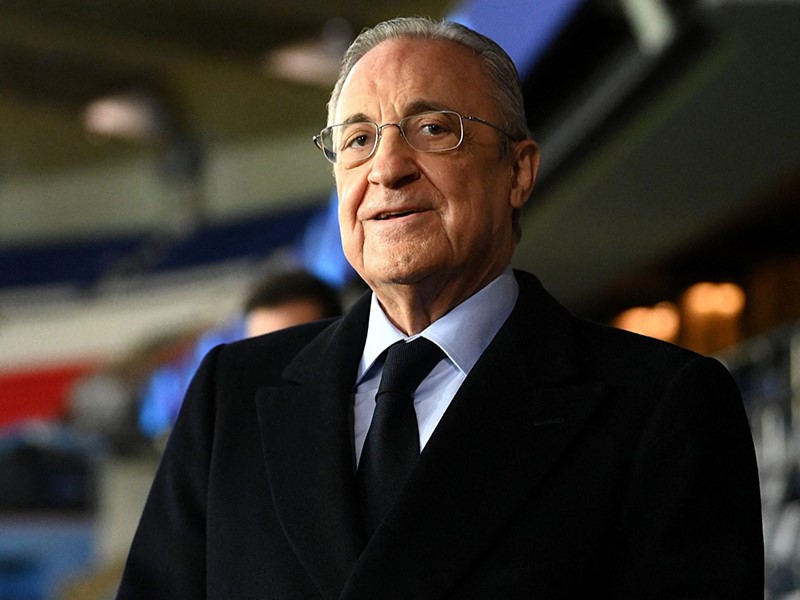
Florentino Pérez has won his re-election bid and will remain president of Real Madrid until 2030 after defeating businessman Enrique Riquelme in the club’s first genuinely contested presidential election in 20 years. Pérez won 21,741 votes, which amounted to 65 percent of the ballots cast, while Riquelme secured 11,814 votes, which is 35 percent. Over 33,000 club members voted in the elections.
Now, this was a comfortable win for Pérez, but the fact that he lost more than a third of the total votes showed that Riquelme ran a good campaign that capitalised on the seemingly little dissatisfactions that the club members were having with Pérez. For years, the construction magnate has either faced no challenger or won elections with minimal resistance. This time, however, Riquelme’s campaign gained significant momentum to sway almost 12,000 votes his way by focusing on concerns about sporting direction, governance, and the future ownership structure of the club.
The election was also marred with controversy, from ballot counting issues to votes being invalidated and even some voters claiming they were not allowed to participate. The margins for Pérez’s win were too large to seriously dispute the results, however, and he has officially returned as president. He will take one message from this victory, however, and that is how a candidate with little institutional experience and limited time to build a campaign still attracted more than one-third of the vote from his structure of over two decades old.
What Pérez must do to restore Real Madrid’s dominance
Now that he has been confirmed as the president, he has work to do. While Riquelme ran an anti-establishment campaign with some big promises, Pérez solely focused on promises. He promised to bring back José Mourinho, which he went ahead and did even before the elections, and promised to launch a €150 million bid for a Galáctico-level superstar that the grapevine claims is Michael Olise. He also secured the signings of Ibrahima Konate and Denzel Dumfries already, while still promising more squad additions and changes.
But does Madrid need more superstars? Analytically, this is Pérez’s MO. His successes have been as a result of big-name signings from the original Galácticos to the Cristiano Ronaldo era signings. Madrid won on and off the pitch when Pérez splashed the cash to bring in marquee names. In recent years, however, critics have argued that the club’s off-field battles have increasingly overshadowed football matters. The prolonged conflict with UEFA over the Super League, disputes with rivals such as FC Barcelona, and debates over ownership reforms have generated headlines but not always trophies.
What are Pérez’s priorities?
As the president of a football club, his first priority is to rebuild the squad intelligently, because Madrid needs balance more than another marketing headline. Defensive reinforcements and midfield depth should be more important than pursuing another big name in an attack that can already do a lot of damage. The follow-up to this is to make sure that he stabilises the football project. With Mourinho’s return, Pérez must ensure that the veteran is not back for nostalgia but for a long-term vision.
The construction magnate also has to listen to the electorate. A 65-35 victory is a clear win, but it is not an overwhelming endorsement. His popularity is waning. The size of the opposition vote suggests many members want change, or at least some form of accountability. Pérez remains one of football’s most successful executives, but this election showed that he is no longer untouchable. His next four years may determine whether he is remembered primarily as the architect of Real Madrid’s modern dominance or as an old dog who stubbornly refused to learn new tricks.