
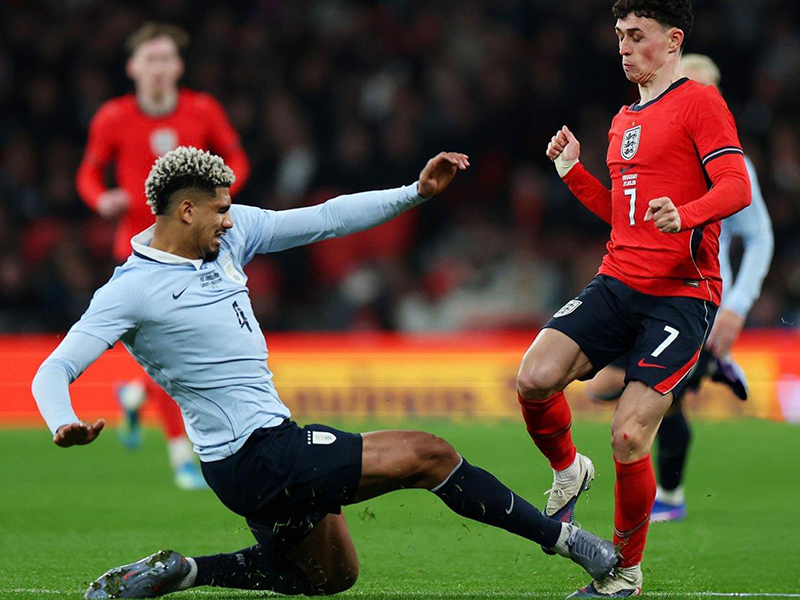
Phil Foden’s opportunity to impress England head coach Thomas Tuchel ended in frustration, both physically and in terms of performance. The midfielder left the pitch in visible discomfort after a heavy challenge from Uruguay’s Ronald Araujo, clutching his ankle while receiving support from Tuchel on the touchline. Beyond the injury scare, his overall display did little to strengthen his case for inclusion in the upcoming World Cup squad.
Selected ahead of Cole Palmer in a key attacking role, Foden was handed the first chance to stake his claim in a highly competitive position. However, he struggled to influence proceedings in a tightly contested midfield battle against a technically strong and aggressive Uruguay side. Frequently dropping deeper in search of the ball, he was unable to make a meaningful impact during the 1-1 draw.
With limited time remaining before squad decisions are finalized, this performance may have represented a crucial missed opportunity. The risk now is that he may not get another significant chance to prove his value to the national team setup.
Competition for attacking roles intensifies
While Foden endured a quiet evening, Cole Palmer made a noticeable impression after coming on. His energetic display included creating a clear scoring chance for Dominic Calvert-Lewin, who failed to convert from close range, as well as delivering the corner that led to Ben White’s goal.
The contrast between the two players’ performances highlighted the increasing competition for places in attacking midfield roles. Tuchel has several strong options available, making every appearance critical for players hoping to secure a spot.
At club level, Foden is also facing challenges. Although he has started the majority of Manchester City’s Premier League matches this season, his early form has not been sustained. This dip in consistency adds further pressure as he attempts to regain momentum both domestically and internationally.
Tactical challenges and limited influence
Tuchel suggested that Foden could have taken more initiative during the match, encouraging him to play with greater freedom and risk in advanced areas. Positioned with awareness of Uruguay’s dynamic midfield trio, Foden was expected to operate creatively but instead remained largely on the periphery.
The nature of the match itself did not lend easily to attacking fluency, with both sides engaged in a scrappy and physical contest. Even so, Foden was unable to impose himself in the final third, limiting his effectiveness in the role he prefers.
Despite the criticism, there was some sympathy for the 25-year-old due to the severity of the challenge he endured, which went unpunished and could have resulted in a more serious injury. Nevertheless, the overall outcome leaves his standing within the squad uncertain.