
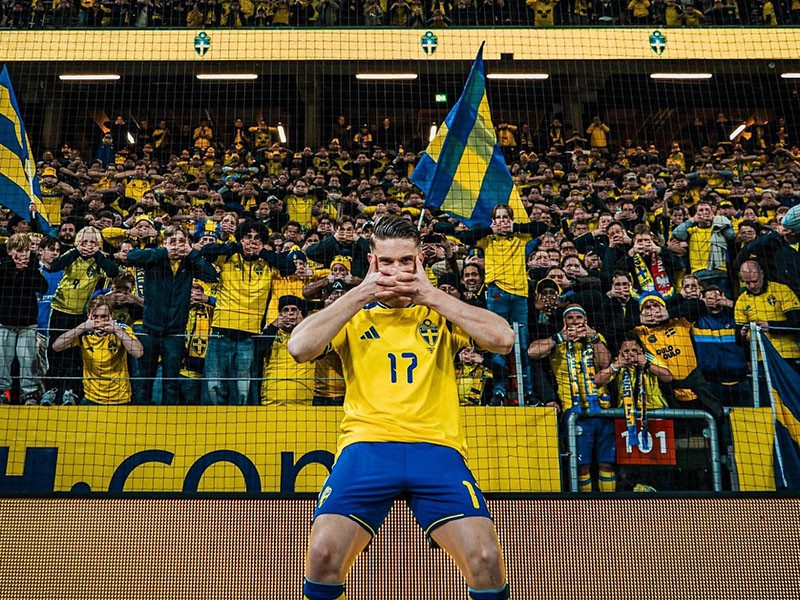
There was confusion everywhere at Strawberry Arena — inside the Poland box, among the Swedish players racing away, and throughout the stands. A sequence of chances kept the crowd on edge: Lucas Bergvall saw his effort stopped, while Besfort Zeneli struck the post with a delicate attempt. Then came the decisive moment, as Viktor Gyokeres reacted quickly from close range to fire the ball high into the net.
That single finish erased the disappointment of Sweden’s poor qualifying run and secured their place at the World Cup under Graham Potter. The home side had twice thought they had found the breakthrough earlier, only for Poland to respond on each occasion.
For much of the second half, Sweden struggled to create, but the closing stages brought urgency and belief. Substitute Gustav Lundgren played a key role, working space inside the area to set up the opportunity that finally made the difference.
Although largely quiet before that moment, Gyokeres once again delivered when it mattered. After scoring three goals in the previous play-off match, he proved decisive again, becoming the standout figure in Sweden’s successful qualification push.
A remarkable turnaround under Potter
Once celebrations settle, Sweden can prepare for their first World Cup appearance since 2018. Their campaign will begin against Tunisia in Guadalupe, Mexico, before further group matches against the Netherlands and Japan in Texas.
Potter reacted with humor after the win, already picturing the trip ahead and joking about needing a cowboy hat for Dallas. Reaching the tournament at all seemed unlikely not long ago, given Sweden failed to win any of their six qualifying matches.
Former coach Jon Dahl Tomasson was dismissed when automatic qualification slipped away, and Potter was brought in to steady the situation. Despite early setbacks, including a heavy defeat to Switzerland and a draw with Kosovo, belief in him remained strong, leading to a contract extension until 2030.
His connection with Swedish football, including his time at Ostersunds, has helped him gain trust quickly. His ability to communicate in Swedish and his past achievements have made him a popular figure, earning patience that many foreign managers might not receive.
Talent delivers when it counts
Sweden’s squad had long been viewed as talented but inconsistent. With attacking options such as Alexander Isak, Anthony Elanga and Dejan Kulusevski, expectations were high, yet performances often fell short.
Former international Pontus Kamark had previously pointed out that the issue went beyond individuals, highlighting a collective failure to perform consistently. Under Potter, that appears to be changing.
A shift towards defensive discipline, including the use of a back five, has brought more balance. While Sweden were not flawless against Poland, they limited opportunities more effectively than before, even keeping Robert Lewandowski quiet.
Despite having limited possession in recent matches, Sweden have shown they can be clinical. Scoring six times across two play-off games suggests their attacking quality can thrive within Potter’s system. With key players still to return, there is growing belief that this squad can finally deliver on its promise at the World Cup.