
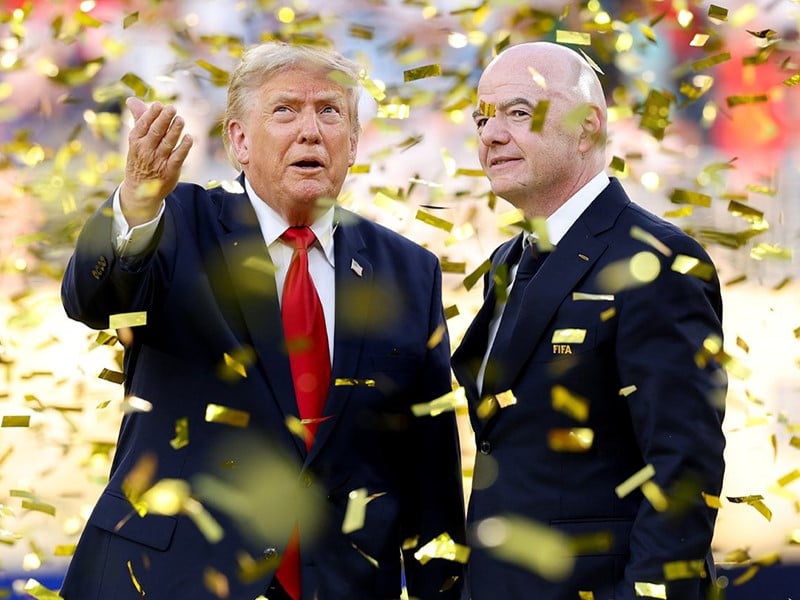
FIFA president Gianni Infantino described the 2026 World Cup as the “biggest event in the history of mankind”, comparing the tournament hosted by the United States, Mexico, and Canada to 104 Super Bowls taking place in a single month. With 48 teams involved for the first time, the competition promised more matches, more nations, and more unforgettable moments. But the expanded format also raised questions about whether the increase in size came at the expense of quality.
The arrival of debutants such as Curaçao, Cape Verde, Jordan, and Uzbekistan added a fresh sense of discovery to the tournament. The group stage produced some memorable stories, especially from smaller nations who made their first appearance on football’s biggest stage. Cape Verde, a country with a population of around 530,000, impressed by securing draws against Spain and Uruguay, as well as Saudi Arabia, to finish second in their group.
Curacao also provided one of the tournament’s surprise moments by recovering from a heavy 7-1 defeat by Germany to earn a point against Ecuador. DR Congo reached the knockout rounds after drawing with Portugal, adding another unexpected chapter to the competition. Without the expanded format, these teams would not have had the opportunity to create those stories.
However, the new structure was not without criticism. The group phase featured 72 matches — more than an entire World Cup used to contain — but only 16 teams were eliminated. The use of head-to-head results as the first tie-breaker also created unusual situations, with teams such as Australia and Paraguay, as well as Austria and Algeria, knowing that a draw would send both sides through.
The real drama arrived once the knockout rounds began. Cape Verde pushed Argentina into extra time before eventually losing 3-2, meaning they completed the tournament without a defeat in 90 minutes against either of the eventual finalists. Their run, along with the story of veteran goalkeeper Vozinha, highlighted the value of giving more countries a chance to compete.
New rules, new formats and the impact on the road to the final
The 2026 tournament introduced a different approach to the World Cup draw, with FIFA attempting to prevent the highest-ranked teams from meeting too early. Argentina, England, France, and Spain were placed into separate sections of the bracket, ensuring they could only face each other from the semi-final stage onwards.
In the end, the special seeding system had little effect on the outcome. The four highest-ranked nations still reached the final four, something that had never happened before in World Cup history. However, one important adjustment was made to the draw to guarantee that Argentina and Spain, ranked first and second, could only meet in the final.
To achieve that, FIFA moved Argentina into Group J and France into Group I. Without that change, the semi-final match-ups would have been different, with England expected to face France and Argentina meeting Spain. The alteration changed the possible route to the final, even though the strongest teams still dominated the later stages.
Another major talking point was the introduction of mandatory three-minute hydration breaks in every match. Fifa presented the stoppages as a measure designed to protect players and maintain fairness, but the breaks became a source of frustration among supporters, especially as they were used for advertising opportunities by broadcasters.
Television companies outside the UK were allowed to show commercials during these interruptions, and advertising slots reportedly reached significant prices, particularly during matches involving the United States and during the final stages of the tournament. Coaches also used the breaks as tactical opportunities, with some matches seeing momentum shift after teams received additional instructions.
Despite criticism from fans, the hydration breaks are likely to remain part of future World Cups. However, European competitions have already rejected the idea, making their introduction into domestic leagues unlikely.
Faster football, record crowds and the business behind the tournament
FIFA refereeing chief Pierluigi Collina entered the tournament determined to improve the rhythm of matches. His focus was on reducing delays caused by slow restarts, substitutions, and players appearing to waste time through injuries.
The changes produced a noticeable difference compared with the 2022 World Cup. While matches in Qatar lasted an average of 101 minutes and 22 seconds, with 58 minutes and three seconds of actual playing time, the 2026 tournament reduced the average duration to 96 minutes and 24 seconds while slightly increasing ball-in-play time to 58 minutes and 15 seconds.
The percentage of matches spent with the ball in action also improved, rising from 57.4% in 2022 to 60.4%. The new approach was viewed as a success because games became more fluid, supporters faced fewer delays, and players provided more football within a shorter overall timeframe. The same regulations are expected to continue influencing domestic competitions.
Away from the pitch, concerns about attendance failed to materialise. Despite criticism over expensive tickets, FIFA announced that stadiums were operating at 99.7% capacity after the quarter-finals, with a record attendance figure of 6,527,410 fans.
The organisation also generated additional revenue through its resale platform, which charged a 30% fee on every transaction. Yet controversy remained, with authorities in New York and New Jersey investigating ticket pricing practices and seat information. Supporters also criticised restrictions on bringing water bottles into stadiums, forcing FIFA to reverse the decision, while transportation costs around venues such as New Jersey and Boston also caused complaints before reductions were introduced.
Politics, refereeing debates and the legacy of the tournament
The political atmosphere surrounding the 2026 World Cup was present before the first match was played. Immigration restrictions affected supporters from several countries, while Somali referee Omar Artan was denied entry at Miami Airport before the tournament began. The situation created an uncomfortable moment for Infantino, who responded by telling people to “chill” and “relax”.
Iran’s participation also became a political issue, with the team facing restrictions on how long they could stay in the United States around their matches. After Iran’s elimination, US homeland security official Markwayne Mullin publicly expressed his reaction to their exit.
One of the biggest controversies emerged when US President Donald Trump contacted Infantino regarding Florian Balogun’s suspension. A FIFA disciplinary committee member later made an unprecedented decision by suspending rather than enforcing the forward’s ban, allowing him to play against Belgium. However, the United States suffered a heavy 4-1 defeat, while the decision raised concerns about possible political influence over football matters.
VAR also became a major discussion point as the tournament progressed. The group stage passed with relatively little controversy, but knockout matches produced more debate over refereeing decisions. The Egyptian Football Association requested an investigation after their defeat by Argentina, following a VAR decision that ruled out one of their goals.
Across the tournament, VAR interventions occurred at a similar rate to the 2022 World Cup, but subjective decisions involving referee monitors were more frequent than in the Premier League. Despite complaints, one major difference was the speed of decisions, with most reviews being completed quickly compared with the longer delays often criticised in domestic football.
The 2026 World Cup delivered more matches, more participants, and more debates than any previous edition. While the expanded format created unforgettable stories from emerging nations, it also brought new challenges involving scheduling, commercial interests, politics, and technology. The tournament’s legacy may ultimately depend on whether football can preserve the excitement of a larger World Cup while addressing the concerns that came with its growth.