
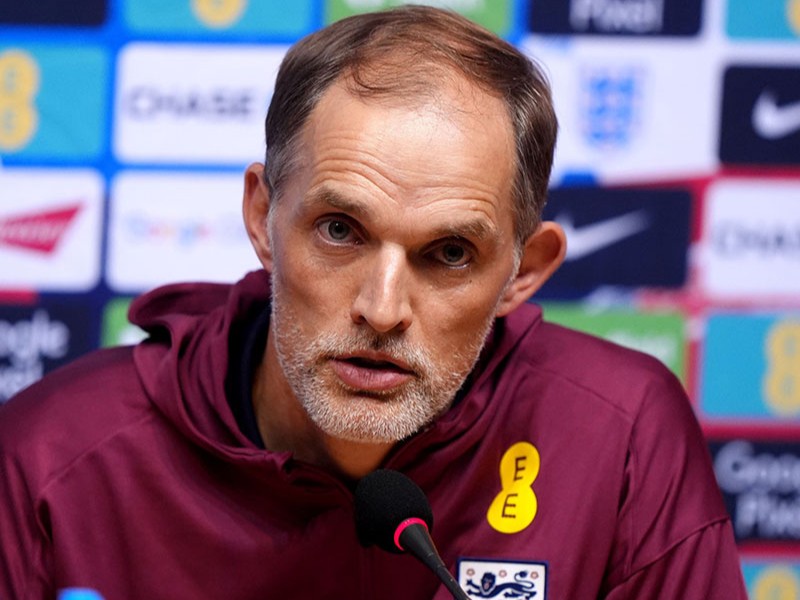
England reached the World Cup semi-finals after overcoming Norway, yet Thomas Tuchel made it clear that the result alone did not satisfy him. The England boss praised the determination, belief, and togetherness shown by his players but admitted he expected a much higher standard with the ball. In his view, too many technical errors, inconsistent passages of play, and a lack of rhythm made the contest unnecessarily difficult.
Although pleased by the resilience his squad displayed, Tuchel stressed that the team is capable of producing far stronger football. He pointed to repeated momentum swings during the match and suggested England were too slow in possession, failing to repeat the patterns that are central to his tactical approach.
The contrast between England’s continued progress and the manager’s critical assessment has become one of the main talking points of the tournament. Despite winning matches, Tuchel believes improved performances are essential if his side are to keep advancing.
The style Tuchel is trying to build
Squad selection before the World Cup reflected the manager’s commitment to a clearly defined system, with players chosen according to specific tactical responsibilities. Competition for certain positions, including the attacking midfield role, highlighted how carefully each player had to fit the overall structure.
The framework is based on controlling possession, pressing opponents aggressively and circulating the ball with purpose to invite pressure before quickly attacking the space left behind. Against deeper defensive blocks, England are expected to create openings through the flanks by combining movement, rotations, and numerical superiority in wide areas.
Those concepts have appeared at different moments throughout the tournament, but Tuchel believes they have not been implemented consistently enough. His criticism after the Norway match focused almost entirely on England’s attacking play rather than their defensive work.
Why Norway caused frustration
Norway defended in a compact 4-5-1 formation, while England organised themselves in a 3-2-5 shape whenever they had possession. Marc Guehi, John Stones, and Ezri Konsa formed the first line, with Declan Rice and Elliot Anderson positioned ahead of them, while Nico O’Reilly advanced into the attacking unit to provide an extra option against Norway’s defence.
When Tuchel said his team was “not repetitive enough”, he was most likely referring to the lack of sustained passing sequences designed to tempt Norway out of shape. His preferred method is to recycle possession patiently before accelerating the attack into newly created spaces either down the wings or beyond the defensive line.
That approach had already been evident earlier in the tournament against Ghana, when Tuchel instructed his players to keep exchanging short passes before switching play quickly. England briefly reproduced that pattern against Norway, drawing defenders towards one side before Anderson attempted to release Noni Madueke into space on the opposite flank. However, those situations became increasingly rare as the game progressed, with England’s possession dropping from 68% before the break to 44% after half-time.
Wide areas offered opportunities England rarely used
The movement within England’s wide triangles was intended to become one of the team’s main attacking weapons during the competition. Norway’s defensive organisation created favourable conditions for those combinations because their wide midfielders stayed alongside the central midfielders while the back four remained narrow.
This structure regularly left space on the outside. As Anthony Gordon moved inside, either O’Reilly or Anderson could attack the vacant channel behind Alexander Sorloth. Because Norway defended zones rather than following individual runners, England could have found free players by moving the ball into those areas more quickly.
Tuchel’s frustration stemmed from England’s inability to recognise and exploit those openings often enough. Similar patterns had previously troubled Norway against Iraq and France, yet England struggled to reproduce them with the same consistency.
One sequence summed up the manager’s concerns. Instead of moving the ball rapidly towards the unoccupied flank, Guehi carried possession at a slow tempo before forcing a pass through the centre, which was intercepted in a dangerous position. That example reflected Tuchel’s description of his side as “sloppy”.
Assistant coach Anthony Barry had expressed similar concerns earlier in the tournament after the Croatia match, saying England were not finding passes through the gaps or increasing the tempo as intended, instead slipping back into cautious habits. Five matches later, those observations still appeared relevant.
Individual quality continues to deliver
Although England did not fully exploit Norway’s defensive structure, they still found decisive moments through the players’ natural instincts. Their opening goal came after Orjan Nyland’s long goal kick reached Anderson, leaving Norway temporarily disorganised as they prepared for an aerial contest.
Anderson drove forward powerfully, forcing Julian Ryerson to commit before releasing Gordon into space on the left. As Kristoffer Ajer shifted across to cover, Sander Berge dropped into the defensive line, creating an opening for Jude Bellingham, who arrived unmarked and finished confidently.
England’s first goal against Mexico had followed a similar pattern. After regaining possession against an unsettled defence, Rice carried the ball directly at the full-back, delaying his movement and allowing Bukayo Saka to receive wide before Bellingham again timed his run into space created by Harry Kane’s movement.
The winning goal against Norway also arrived while the opposition was reorganising after defending a corner. Morgan Rogers’ powerful strike forced Nyland into a save, and Bellingham reacted quickest to convert the rebound. His anticipation once again proved decisive.
After the match, Bellingham highlighted the psychological side of tournament football, saying success depends on handling adversity as much as technical or tactical qualities. England have repeatedly shown they can thrive in chaotic situations through individual talent and mental strength, but Tuchel remains convinced that stronger collective performances will provide a more reliable path to victory.
With Argentina waiting in the semi-finals and having shown weaknesses in wide areas, the England manager is expected to continue searching for the attacking fluency he believes his team can achieve.