
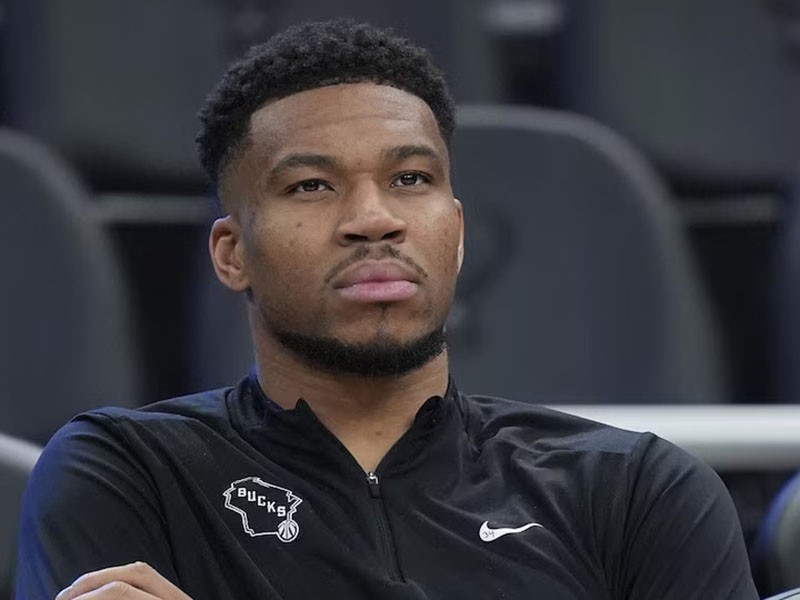
Milwaukee’s season has come to an end, and uncertainty now surrounds Giannis Antetokounmpo’s future with the franchise. After their campaign concluded with a 50th defeat and the departure of head coach Doc Rivers, attention has shifted fully toward the offseason and the possibility of a blockbuster move. Antetokounmpo himself admitted he is unsure whether he has played his final game for the Bucks, while also noting that no contract extension has been offered yet.
During the trade deadline, conversations involving Antetokounmpo appeared limited to a small group of teams due to the complexity of executing such a massive deal midseason. Salary restrictions, roster limitations, and competitive timelines all played a role in narrowing the field. However, the offseason resets many of those constraints, opening the door for significantly more teams to explore potential deals.
With more flexibility in roster construction, clarity on draft positioning, and fewer financial restrictions, nearly every franchise can at least consider a pursuit. While not all will ultimately emerge as realistic contenders, the number of plausible suitors has expanded considerably. What was once a narrow market has now become a broad and fluid landscape.
Antetokounmpo’s comments suggest that the coming months will be decisive. If an extension is presented, he will weigh it carefully. If not, his focus will shift toward proving his value and evaluating future opportunities. In the meantime, teams across the league are already preparing for scenarios in which he could become available.
Teams ready to push all their chips in
A handful of franchises appear prepared to make aggressive offers in pursuit of a superstar of this magnitude. Golden State and Miami were already heavily involved at the deadline, and their potential packages improve in the offseason with additional tradable draft picks. Both teams are motivated by urgency — one aiming to maximize the closing window of its franchise cornerstone, the other seeking a return to contention without rebuilding.
Despite their willingness, neither team is guaranteed to present the most attractive offer. The evolving value of future draft picks, particularly with expected lottery changes, complicates long-term projections. Still, both organizations are known for resisting rebuilding strategies and could be willing to part with nearly everything outside of their foundational players.
Minnesota presents a different kind of aggressiveness. Their front office has shown a willingness to make bold decisions, even after recent success. While constructing a viable offer would likely require a multi-team structure and the redistribution of several key veterans, their intent to remain competitive in a strong Western Conference could push them toward a major gamble.
In each case, the challenge lies not only in assembling the assets but also in convincing Milwaukee that their offer aligns with a long-term reset. Even so, these teams represent the most determined group of potential bidders.
Big-market appeal and complex pathways
Several major-market teams are frequently linked to Antetokounmpo, but their paths to acquiring him are far from straightforward. New York has been identified as a preferred destination, yet its lack of premium trade assets presents a significant obstacle. For the Knicks to succeed, Antetokounmpo would likely need to influence the market by signaling a willingness to commit long-term only in specific situations.
Los Angeles faces a similar challenge. While the Lakers could eventually pursue him in free agency, their current trade package lacks strength unless additional cooperation from key players is secured. Both franchises rely heavily on market appeal rather than overwhelming trade value, making their chances dependent on external pressure rather than pure negotiation strength.
Other teams in these markets, such as Brooklyn and the Clippers, offer alternative possibilities. Brooklyn possesses a large collection of draft assets, while the Clippers could benefit from favorable lottery outcomes to strengthen their proposal. However, each scenario requires multiple variables to align, from additional acquisitions to financial considerations.
Ultimately, big-market teams remain relevant largely because of their attractiveness to players. Whether that advantage translates into a successful deal will depend on how much influence Antetokounmpo chooses to exert over the process.
Contenders weighing core sacrifices
Another group of teams faces a different dilemma: deciding whether to part with foundational players to acquire a proven superstar. Cleveland, Philadelphia, and Orlando all have assets that could interest Milwaukee, but each must determine how much it is willing to give up.
For Cleveland, pressure to contend immediately could make a significant move more likely, especially if postseason results fall short. Philadelphia, on the other hand, appears less inclined to risk its future on a high-stakes trade, particularly given existing concerns about roster health and long-term stability. Orlando’s situation is more fluid, with potential financial constraints and roster fit questions possibly pushing them toward a bold consolidation move.
These decisions are not purely transactional; they involve long-term identity and strategic direction. Trading a young cornerstone for an established star carries both immediate upside and lasting consequences, making each case highly situational.
outside shots and long-term thinkers
Beyond the primary contenders, several teams fall into more speculative categories. Franchises like Charlotte, Portland, Toronto, and Atlanta have the assets to construct deals but may struggle to convince Antetokounmpo to commit long-term. In such cases, the risk of acquiring him as a short-term rental becomes a major factor.
Other teams, including Boston, San Antonio, Detroit, and Houston, do not necessarily need to make a move but could explore the opportunity if conditions become favorable. Some are already strong contenders, while others possess significant resources for a future blockbuster. Their involvement depends largely on timing, internal development, and postseason outcomes.
For these organizations, the decision is less about necessity and more about opportunity. The presence of a player like Antetokounmpo on the market forces even stable teams to evaluate scenarios they might otherwise ignore.
As the offseason unfolds, the list of suitors will inevitably shrink. What remains uncertain is not just where Antetokounmpo might land but how aggressively teams are willing to reshape their futures for a chance to acquire him.