
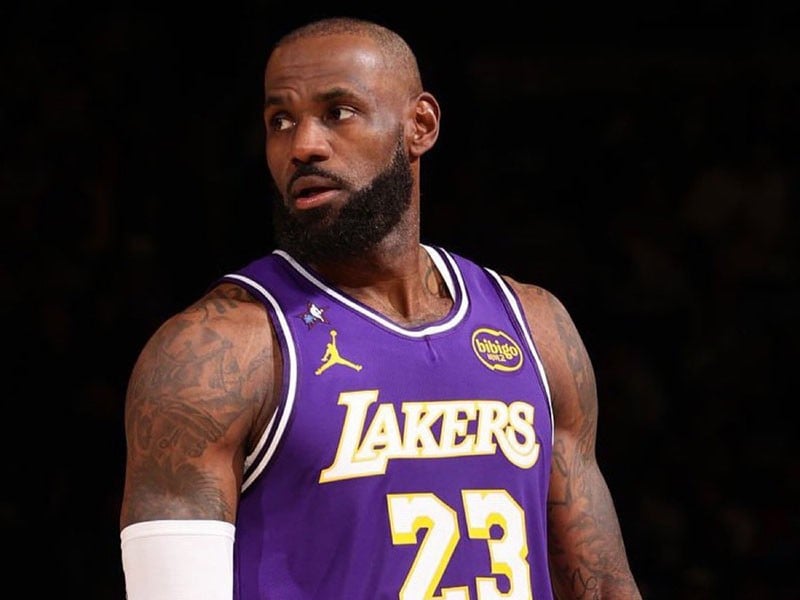
LeBron James has spent more time on an NBA court than anyone in history, leading the league in minutes, games, and seasons. After entering the league at 18, it would seem unlikely for him to reveal anything new at 41. Yet recently, he delivered a moment that surprised even head coach JJ Redick. In a tight game against the Denver Nuggets, James dived across the floor for a loose ball—an effort play rarely associated with him in past years—turning a likely rebound into a jump ball that helped spark a crucial sequence.
For Redick, it was something entirely unfamiliar. After decades of watching James, including his high school years, he had never seen that level of physical risk for a single possession. James himself acknowledged it. While such hustle plays have always mattered, this specific type was once unnecessary for someone who carried such a massive burden on both ends of the floor. His teams relied on him too heavily to justify that kind of gamble.
That dynamic has shifted. Following the arrival of Luka Dončić and the rise of Austin Reaves, James is no longer the central figure in every possession. Redick even noted that the team functions best when he is the third-most utilized player. For someone who spent decades as the offensive engine, this represents a dramatic transformation.
Redefining impact without dominating possession
Although labeled a “role player,” James’ contribution remains far from ordinary. In his recent stretch of games, he has still produced strong numbers—19 points, 7.3 rebounds, and 5.5 assists per game—while shooting efficiently. However, the meaning of his role has changed. Rather than dictating every action, he is reshaping his approach to complement teammates who now drive the offense.
James explained that observing Dončić and Reaves during his absence allowed him to better understand how to integrate himself upon returning. Instead of forcing his usual style, he adjusted to their rhythm. Earlier in his career, teammates had to adapt to him; now, he is the one making those adjustments.
Statistically, his usage remains relatively high compared to typical players, but how he uses possessions has evolved. He holds the ball less, acts more quickly, and often finishes plays rather than initiating them. Where he once created advantages through isolation and pick-and-roll, he now capitalizes on openings generated by others. A significant portion of his scoring opportunities now comes from assisted plays, marking a stark contrast to his earlier seasons when he primarily created his own shots.
A different offensive identity within a winning system
This new version of James is evident in how he operates within the offense. Isolation plays have nearly disappeared, while transition opportunities have become a major source of scoring. As he has aged, generating offense in the half-court has become more challenging, making fast-break situations increasingly valuable—especially on a team led by Dončić, who rarely pushes the pace.
In structured sets, James has also taken on a more frequent role as a screener, particularly alongside Reaves. This partnership creates difficult defensive choices: defenders must either give Reaves space to shoot or risk allowing him to attack downhill. When defenses collapse, James becomes a dangerous short-roll option, capable of finishing at the rim or exploiting mismatches with quick decisions.
Even in more complex plays, his presence alters defensive behavior. Opponents remain wary of his ability to create, which opens opportunities for teammates. When the ball swings to James after initial action from Dončić, defenses often react with urgency, turning small advantages into significant ones.
A rare transformation among basketball legends
There is little historical precedent for a player of James’ stature making such a transition. Legends like Magic Johnson and Larry Bird never shifted into supporting offensive roles, while Michael Jordan and Kobe Bryant remained focal points due to circumstances surrounding their careers. Even players such as Jason Kidd and Gary Payton made similar adjustments only at a different level of impact.
James’ case stands apart because he is still performing at a high level while willingly stepping back. This balance between star ability and supporting responsibility is difficult to achieve, as many players struggle to adapt their skill sets when their role diminishes.
The results have been striking. Since fully embracing this approach, the Los Angeles Lakers have surged, winning nine consecutive games and significantly improving their offensive output. The team’s success reflects a broader shift in identity, where roles are clearly defined and aligned with winning priorities.
Leadership through example and team-wide influence
James’ willingness to adapt has had a ripple effect across the roster. Players like Deandre Ayton have also embraced less glamorous responsibilities, focusing on screening, rebounding, and defense instead of personal scoring ambitions. Accepting a reduced role becomes easier when one of the game’s greatest players does the same.
Meanwhile, Dončić has thrived with clearer control of the offense, strengthening the team’s overall structure. The partnership between him and James now operates seamlessly, with each building on the other’s strengths rather than alternating control.
After more than two decades, James continues to evolve. Once defined by dominance and control, his game is now shaped by awareness and adaptability. He is no longer simply the centerpiece; he has become the element that ensures everything fits together. In doing so, he has given new momentum to a team that once appeared to be fading.