
The St. Louis Cardinals were not expected to be in contention during the 2026 season. After years of declining performance following a long stretch of success, the club entered a structural overhaul under new baseball leadership.
That transition came after the final phase of tenure for former decision-maker John Mozeliak, during which both on-field results and internal development systems deteriorated. A lack of investment in modern development tools and staffing was cited as part of the broader organizational decline.
Into that environment stepped Chaim Bloom, first as an advisor tasked with evaluating the entire organization and later as the figure leading baseball operations. His approach leaned toward rebuilding, prioritizing long-term structural fixes over short-term competitiveness.
Veteran talent was moved out in a series of deals involving players such as Brendan Donovan, Sonny Gray, Willson Contreras, and Nolan Arenado. In return, the organization focused heavily on acquiring young pitching while retooling its player development system, even as expectations for immediate success dropped.
Why the early results look better than expected
Despite the anticipated step backward, St. Louis has remained competitive, sitting at 31–27 and in second place in its division while holding a wild-card position. On pace for roughly 87 wins, the club is outperforming preseason projections tied to its rebuild phase.
However, underlying indicators suggest caution. The team’s run differential sits at minus-11, which contrasts sharply with its winning record. Based on that figure alone, its “expected” record is closer to 28–30 rather than its actual standing.
A key driver of the gap has been performance in tight games. The club has excelled in one-run contests and extra-inning games, going 11–6 and 7–2, respectively, with some overlap between those categories. While those outcomes count in the standings, they are often considered volatile in projection models.
In games decided by five or more runs, the team has been below .500 at 6–7, reinforcing the idea that current results may be partially inflated by short-term variance rather than dominant underlying play.
Reasons for optimism in the underlying profile
One of the more encouraging developments has been a gradual improvement in the pitching staff’s ability to generate strikeouts. Early in the season, the rotation ranked near the bottom of the league in strikeout rate, but it has moved closer to league average over time.
Weekly tracking of rotation strikeout percentage shows a general upward trajectory, rising from the mid-teens in the early weeks to multiple spikes above 20% and even into the mid-to-high 20s at points. The league average sits around 21.9%, and the Cardinals have recently hovered near that mark after a slow start.
This shift is linked to increased comfort with new pitch usage and mechanical adjustments introduced by the organization’s upgraded development infrastructure. Alongside that, the team has emphasized workload management and structured rest for starters, aiming to preserve consistency over the season.
Defensively, the team also benefits from strong infield play, particularly up the middle, which helps support a pitching staff that relies more on ground balls than strikeouts. This combination offers a potential counterbalance to its earlier pitching limitations.
Lineup additions and internal adjustments
Offensively, production has been concentrated near the top of the lineup, leaving the lower portion less effective. That imbalance has been identified as a key area for improvement moving forward.
A major expected boost comes from the return of Lars Nootbaar, who has been recovering from offseason surgery on both heels. His return is anticipated to strengthen the lineup depth and provide additional offensive stability.
His activation may also force a roster decision in center field, where Victor Scott II has provided elite defense but limited offensive value. Internal options such as Nathan Church have been mentioned as possible alternatives due to stronger offensive performance while maintaining solid defensive ability.
The organization has also promoted Jimmy Crooks to address production issues at catcher after strong minor league output, while adding Nelson Velázquez as a right-handed power presence. These moves are aimed at reducing the offensive gap in the lower half of the order.
Schedule outlook and uncertainty ahead
The upcoming stretch of games offers an opportunity to stabilize the team’s position. In June, a significant portion of remaining matchups are against teams with losing records, and more than half will be played at home, providing a favorable environment for maintaining momentum.
Performance in this window could influence how the organization approaches the remainder of the season, particularly as decisions begin to loom around the trade deadline on August 3. The front office has emphasized a long-term focus, suggesting limited willingness to make aggressive short-term acquisitions.
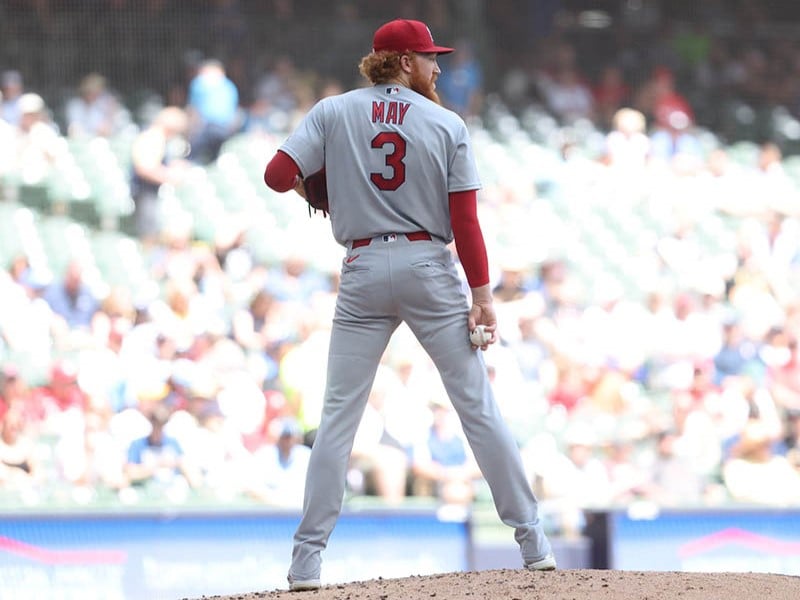
Players who could become trade considerations include Nootbaar, Dustin May, Riley O’Brien, JoJo Romero, and Pedro Pagés, depending on how the season unfolds. Continued competitiveness could complicate those decisions and signal faster-than-expected progress in the rebuild.
Overall, the team’s situation remains difficult to classify. Strong results in the standings coexist with weaker underlying indicators, leaving the club positioned between genuine contention and expected regression.