
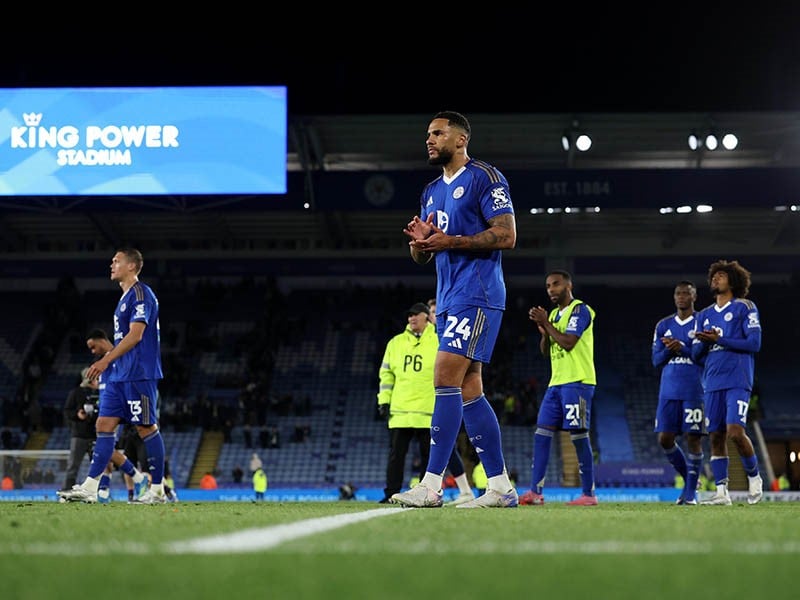
Leicester City’s dramatic decline reached a new low as they were relegated to League One, just a decade after their remarkable Premier League triumph. The Foxes confirmed their second successive drop after a draw with Hull City at the King Power Stadium, sealing a painful chapter in the club’s history. It marks only the second time in 142 years that Leicester will compete in the third tier, completing a grim cycle that began long before their unforgettable title-winning season.
Needing a victory to keep survival hopes alive, Leicester instead handed the initiative to their opponents early on. A poor pass from goalkeeper Asmir Begovic was intercepted by Liam Millar, who calmly finished to give Hull the lead. The hosts responded after the break, with Jordan James converting a penalty following a foul on Abdul Fatawu, before Luke Thomas fired in a close-range volley to ignite belief among the home supporters.
That optimism was short-lived, however, as Oli McBurnie struck an equaliser for Hull, crushing Leicester’s hopes. Despite late pressure, including efforts from Patson Daka, Aaron Ramsey, and Thomas, the home side could not find a winner. Hull, meanwhile, also pushed forward but ultimately settled for a result that saw them slip out of the play-off positions on goal difference.
A night that reflected a troubled season
The match itself mirrored Leicester’s broader struggles throughout the campaign. Moments of attacking promise were repeatedly undone by defensive lapses and missed chances. Even without their six-point deduction for financial breaches, their position in the table would still have left them facing relegation at this stage.
Hull’s situation offers a contrast of resilience despite limitations. Operating under a transfer embargo and relying on free transfers and loan signings, they have remained competitive in their push for promotion. Their ability to stay in contention highlights the different trajectories of the two clubs, with Leicester’s issues rooted more deeply in structural and performance-related problems.
Manager Gary Rowett expressed frustration after the match, pointing to a lack of urgency in the first half and missed opportunities throughout the game. While he acknowledged improvements after the break, he admitted that similar intensity earlier in the season might have changed their fate. The failure to convert chances and avoid costly mistakes has been a recurring theme in Leicester’s downfall.
Hull’s assistant coach Dean Holden also reflected on missed opportunities, noting his side’s inability to protect leads in recent matches. While disappointed with the result, he accepted the point as something to build on, emphasizing the competitive nature of the encounter.
Echoes of past glory and tragedy
The relegation stands in stark contrast to the extraordinary highs experienced at the King Power Stadium. In 2016, the club lifted the Premier League trophy in one of football’s most improbable achievements, a moment celebrated with iconic performances and global admiration. That triumph followed a previous spell in League One just seven years earlier, underlining how dramatically fortunes can change.
The stadium has also been a place of deep sorrow. The death of chairman Vichai Srivaddhanaprabha and four others in a helicopter crash outside the ground remains a defining tragedy in the club’s history. A statue outside the stadium honors his role in transforming Leicester into a global success story.
His son, Aiyawatt Srivaddhanaprabha, who succeeded him as chairman, has publicly accepted responsibility for the club’s decline. Despite mounting pressure from supporters, he has maintained his commitment to ownership, even as financial losses exceeded £272 million over recent seasons. These losses, combined with regulatory issues, eventually led to the points deduction that further compounded their problems.
The club’s leadership and recruitment strategy have come under heavy scrutiny, particularly regarding a costly squad that has failed to deliver results. Director of football Jon Rudkin has been a focal point for criticism as supporters question decisions that have contributed to one of the poorest seasons in the club’s history.
The attacking void and rising tensions
A major factor in Leicester’s struggles has been the absence of a consistent goal scorer following the departure of Jamie Vardy. The veteran striker had remained a key contributor well into his late thirties, leading the team in scoring during both their promotion campaign and their subsequent relegation season from the Premier League.
This season, no player has come close to filling that gap. James emerged as the club’s top scorer with 11 goals, while forwards Jordan Ayew and Patson Daka combined for the same total. The decline in attacking output is evident, with Leicester scoring significantly fewer goals while conceding more compared to their previous Championship-winning campaign.
Several players who once performed strongly at this level have struggled to replicate that form, leading to growing frustration among supporters. Figures such as Harry Winks, Stephy Mavididi, Jannik Vestergaard, and Hamza Choudhury have faced intense criticism as expectations have not been met.
Tensions have spilled beyond the pitch, illustrated by a heated exchange between Winks and a supporter after a recent defeat. The incident, which circulated widely online, underscored the strained relationship between players and fans during a season marked by disappointment and decline.
Leicester’s fall now places them alongside other clubs that have experienced consecutive relegations, a sharp contrast to the team that once defied all odds to become champions of England.