
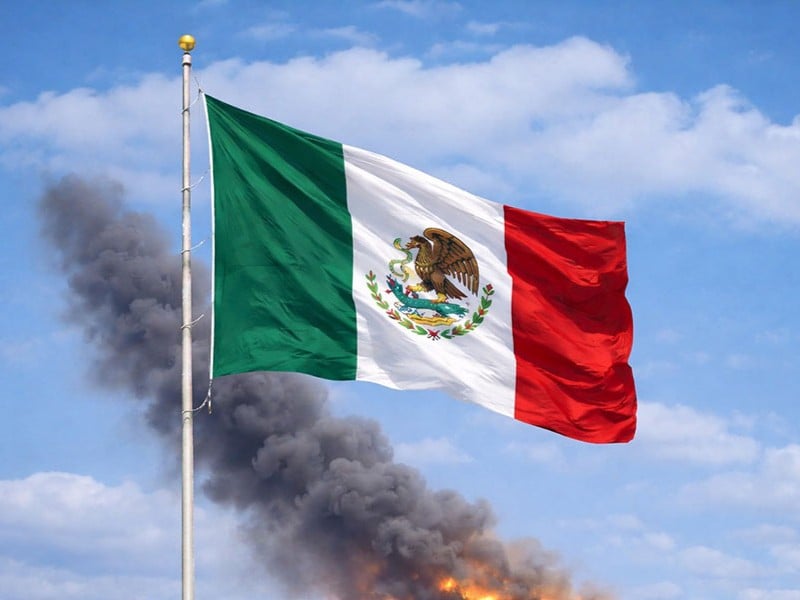
Mexico’s preparations for this summer’s FIFA World Cup face uncertainty as violence from the Jalisco New Generation (CJNG) cartel intensifies. The criminal organisation has clashed with the Mexican military, blocked roads, and set vehicles on fire following the killing of its leader, Nemesio Oseguera Cervantes, also known as ‘El Mencho’, in a military operation on Sunday.
The unrest began in Jalisco, where authorities declared a code red alert, and has now expanded to more than a dozen regions. Videos shared online show armed individuals patrolling urban areas, with smoke rising over cities. At least 25 members of the National Guard have died in a single 24-hour period.
Jalisco’s capital, Guadalajara, which will host four World Cup matches, along with Mexico City and Monterrey, where nine more matches are scheduled, is at the center of concern. Experts warn that the elimination of El Mencho could trigger a period of instability as rival factions compete for control.
Javier Eskauriatza, assistant professor of criminal law at the University of Nottingham, notes that crackdowns on cartels often provoke significant retaliation, creating a difficult security environment to manage.
Cartels’ economic interests and tourist safety
Despite the violence, experts believe cartels have incentives to maintain a degree of calm during major events. “Cartels benefit from a peaceful World Cup,” says Dr. Eskauriatza. “They invest in local businesses, hotels, and restaurants, so it is in their interest that international visitors enjoy their stay.”
The CJNG, valued at more than £10bn and with tens of thousands of members, has a history of kidnappings, massacres, and attacks on politicians since 2009. Nonetheless, some members are seen positively in local communities due to their contributions to infrastructure and facilities.
Dr. Karina Garcia-Reyes, senior lecturer in criminology at UWE Bristol, assesses the threat to tourists as moderate. She suggests that unless further military actions occur this week, authorities in the affected regions are likely to manage risks, allowing fans to travel safely if they follow official guidance.
The cartel’s violent response is seen as a necessary show of strength following the removal of its leader. Social media footage of the incidents serves to amplify their message nationally, underlining the scale and organization of their reaction.
Impact on sports and international perception
The unrest has already affected football in Mexico, with four matches – two in the top division and two in the second tier – postponed on Sunday due to security concerns. Monica Serrano Carreto, professor of international relations at El Colegio de Mexico, warns that while many hope the retaliation is temporary, there is a risk of continued unrest and unpredictability.
The weapons at the cartel’s disposal, some capable of targeting helicopters, mean that military confrontations are likely in response. The images and reports of violence have influenced international perceptions, potentially affecting travel plans for visitors attending the World Cup.
Mexico has faced heightened pressure to tackle cartel activity in the past year. Jon Benjamin, former UK ambassador to Mexico, emphasizes the seriousness of the situation, highlighting previous US designations of cartels as terrorist organisations and the extradition of cartel figures. He adds that international political factors play a key role in the current escalation.